
How Is Roll Repair Performed? The Refurbishment Process at Teknik Hadde with Before-and-After Results
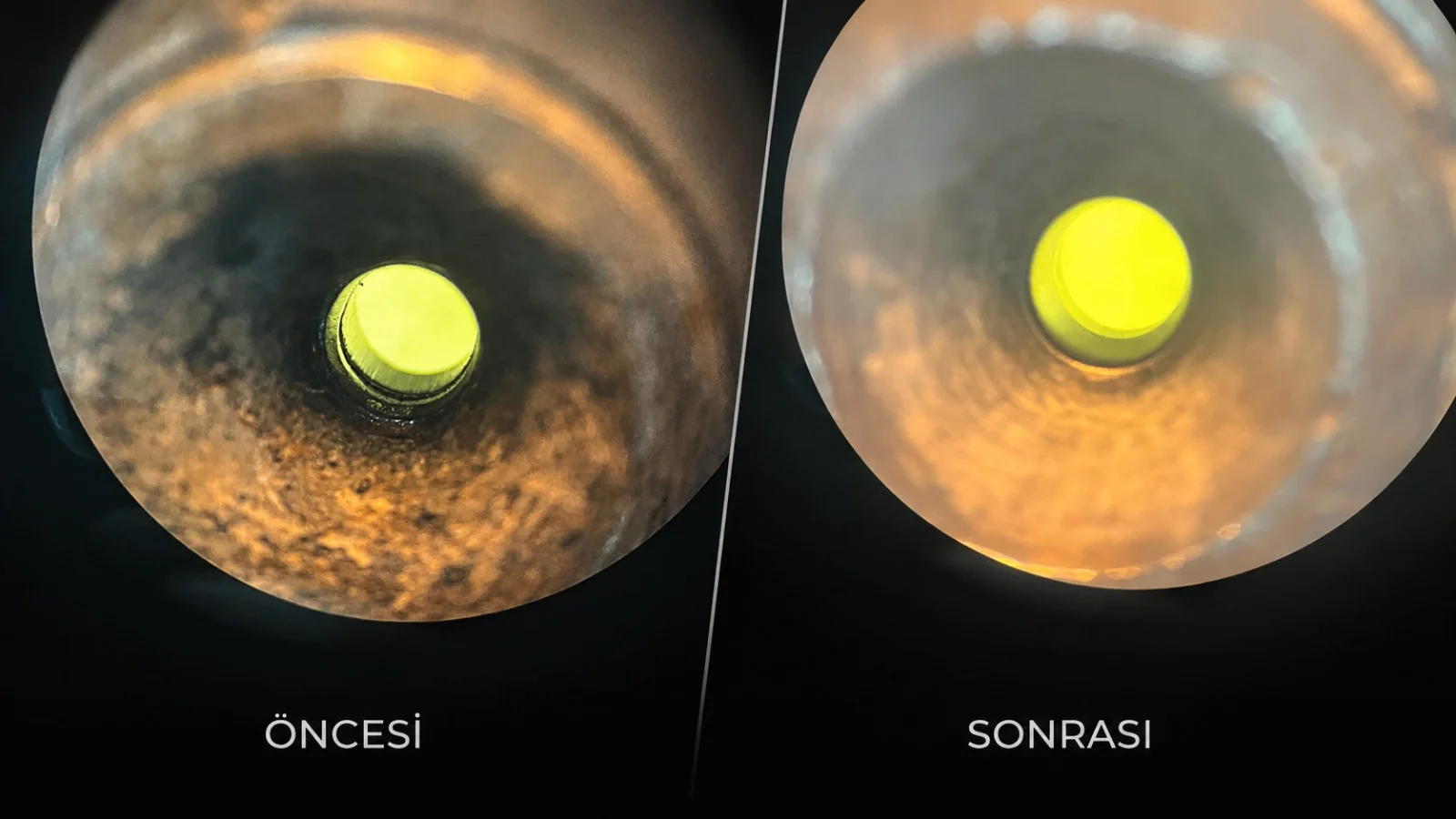
Roll repair is the process of technically inspecting rolls whose working surfaces have changed during use, applying the necessary dimensional and surface treatments, and restoring them to a condition suitable for production again.
This process should not be regarded merely as surface cleaning or polishing. The roll’s current dimensions, working geometry, surface condition, and the production conditions in which it will be reused are evaluated together.
Can a Used Roll Be Returned to Production?
Rolls that are technically suitable can be reused after the necessary inspections and processes. The evaluation considers not only how long the roll has been used, but also its current technical condition.
Current Diameter
The roll’s current dimensions and the operating range that can be achieved after refurbishment are evaluated.
Working Surface
The current surface condition of the active working area and the applicable refurbishment processes are examined.
Geometry
The suitability of the working geometry for current production conditions and the intended use is evaluated.
Target Dimension
The dimensions and operating conditions in which the roll will be reused are assessed from a technical perspective.
A Different Working Dimension May Be Possible
When suitable, the working area can be reconditioned and the roll can be returned to the production process. If the existing structure allows, it may also be possible to change the working diameter and re-evaluate the roll for a different dimension.
This decision is made not only according to the desired new dimension, but by evaluating the roll’s existing technical limits and working geometry together.
How Does the Repair Process Work at Teknik Hadde?
The roll refurbishment process does not begin with direct intervention on the existing part. First, the current condition is evaluated, and the process to be applied is determined according to the intended production conditions.
Inspection
The roll’s working surface, current dimensions, and geometric structure are evaluated. The active areas to be processed are identified.
Technical Evaluation
The refurbishment process is planned by considering the intended operating conditions, current dimensions, and working geometry.
Machining and Surface Refurbishment
Controlled machining is applied to the required working areas. The active surface is prepared with the production conditions in which it will be reused in mind.
Measurement and Final Inspection
After processing, the working area, the resulting surface, and the target dimensions are checked to complete the refurbishment process.
More Than Surface Polishing
The aim of roll repair is not simply to obtain a visually renewed surface. The geometry, dimensions, and surface structure of the working area must be evaluated together.
Why Roll Repair?
Refurbishing rolls that can be technically re-evaluated is a practice that contributes to more planned and efficient use of existing production equipment.
- Helps make more efficient use of the existing roll inventory.
- Supports returning technically usable equipment to production.
- May allow different working dimensions to be considered when the existing structure is suitable.
- Ensures that maintenance and refurbishment processes are carried out based on measurement and technical inspection.
The Same Process Is Not Applied to Every Roll
The key stage before refurbishment is evaluating the roll’s current technical condition. The applicable process is determined after the current diameter, working area, geometry, and target new dimension have been assessed together.
The Importance of Production Experience in Roll Repair
Roll repair is not a surface treatment independent of production expertise. To determine how and where to intervene on a roll, its working geometry, surface structure, and dimensional relationships must be evaluated correctly.
At Teknik Hadde, we also apply our production experience in the field of rolls and dies to repair and refurbishment work. We regard rolls received for repair not merely as used parts, but as precision production equipment that, when technically suitable, can return to production after the necessary processes.
In this way, the refurbishment process goes beyond simply correcting the existing surface and is based on evaluating dimensions, geometry, the working area, and the intended operating conditions together .
Re-Evaluate Your Rolls from a Technical Perspective
Rolls that are technically suitable for reuse can be returned to production through accurate dimensional control, controlled machining, and proper surface preparation.
By sharing the dimensions and working condition of your current roll, along with your intended new operating dimension, you can receive a technical evaluation from the Teknik Hadde team.
Contact Teknik Hadde


